Showing posts with label Pediatrics. Show all posts

Saturday, April 20, 2013

Drug allergy and Food Allergy

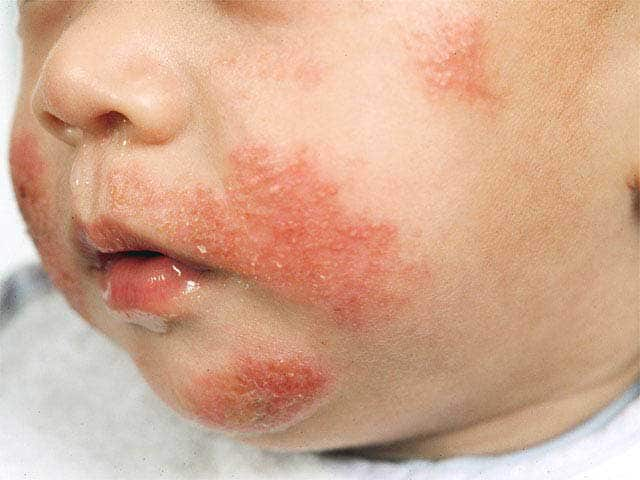
Drug allergy unwanted side effect to certain medication.Food allergy same like Drug Allergy in effect,commonly skin reaction (rash).nousea ,vomiting, Diarrhea and swelling In mouth and throat. Drug allergy commonly occured secand time use of the medicine not first use.
Drug allergy is ife-threatening conditin but rare to couse Death.
Skin reactions of Drug allergy is measles-like rash so we must take good history for prober diagnosis and wright managment.
we should know that skin allergy may be occured after days or weeks from the first dose of the drug.(NB: good history)
Systemic symptomes and signs such as Rapid or irregular heart beat,Fainting.low Blood pressure and Chest tightness, wheezing, throat tightness
-->
Now You can watch This Video and we hope that is informative:

Advice you to Read This topic if you are interested by Drug allergy and Food Allergy
http://life4u.ahlamontada.com/t51-atopic-dermatitis-in-emergency-medicine#68
-->

If you want to Follow us please add your E-mail below:
Enter your email address:


===============
 
JOIN OUR PAGE IN FACEBOOK


NB:
# Commenest drugs couse allergy such as codeine, morphine, nonsteroidal antiinflammatory drugs (NSAIDs, such as ibuprofen or indomethacin), and aspirin.
# Antibiotics such as penicillin, sulfa drugs, and tetracycline.
# Antiseizure medications such as phenytoin (Dilantin) or carbamazepine (Tegretol).
# Certain food allergies such as to eggs, soybeans, or shellfish
=====================================
 Join Our Channel in Youtube
Medical Learninig Videos


Friday, April 19, 2013

Bronchial Asthma video from A-Z


Bronchial Asthma video from A-Z


Bronchial Asthma  common in USA about 20 million Americans have asthma.So we here will discus How we can deal with Allergy and what we should know about Bronchial Asthma by reading this topics and watching video from youtube also within days we will discus all allergy diseases in details so you can add your E-mail below to follow our blog.
Enter your email address:


=============
JOIN OUR PAGE IN FACEBOOK

Bronchial Asthma Triggers:

Bronchial asthma triggers may include:
  • Smoking and passive smoking.
  • Infections such as colds, flu, or pneumonia.
  • Allergens such as food, pollen, mold, dust mites, and pet dander and others.
  • Excessive Exercise.
  • Air pollution and toxins,dust.
  • Weather, especially extreme changes in temperature.
  • Drugs (such as aspirin, NSAID, and beta-blockers).
  • Food additives (such as MSG).
  • Emotional stress and anxiety.
  • Perfumes and fragrances.
  • Acid reflux.
  • Rare: Singing, laughing, or crying.
--> Watch This Video:


Signs and Symptoms of Bronchial Asthma

One or more of the following signs and symptoms:
  • Shortness of breathing.
  • Tightness of chest.
  • Wheezing (patient can hear that in sever asthma)
  •  cough or a cough that keeps you awake at night.
Specially in:
*At  night or early morning
*Exercise – cold air
*Genetic Atopy ( IgE)
*Respiratory infections
*After asprin or B-blockers

Diagnosing Bronchial Asthma

Asthma tests may include:

  • Spirometry: A lung function test to measure breathing capacity and how well you breathe. You will breath into a device called a spirometer.
  • Peak Expiratory Flow (PEF): Using a device called a peak flow meter, you forcefully exhale into the tube to measure the force of air you can expend out of your lungs. Peak flow monitoring can allow you to monitor how well your asthma is doing at home.
  • Chest X-ray: Your doctor may do a chest X-ray to rule out any other diseases that may be causing similar symptoms as pneumonia.

Treating Bronchial Asthma

Aim of Treatment

*Relievers (Quick)
*Controllers (long term)
*Patient education
 Relievers

-Short-acting inhaled β2-agonists
Salbutamol,   Terbutaline
-Long-acting oral β2-agonists
SalmetrolFormroterol
-Anti-cholinergics
Ipatropium, Tiotropium give synergestic bronchodilatation BUT of more benefit in COPD
Preventers  
Inhaled corticosteroids
=Budesonide/ beclomethasone/ fluticasoneuse any
=Start (400-1000 mcg/day approx. in 2 divided doses)
=Maintain for 3 months
=Taper slowly and keep at 200 mcg
=Safe for long-term use (years)
Famous available drugs :

lClenil modulite = Beclomethasone
Symbicort = Budesonide  + Formoterol
Pulmicort = budesonide
Seretide  = Fluticasone + Salmeterol
Flixotide = fluticasone
Foradil = formoterol
Atrovent = ipratropium bromide
Spiriva = tiotropium
Leukotrine receptor antagonist 
Benefit in exercise induced asthma – ch  rhinitis
Can be used alone - Not as effective as inhaled steroid
May be first-line for 2 to 5 yr. olds.
Montelukast (singulair)  - Zafirlukast
4 mg, 5 mg, 8 mg tabs available & sachets
Can be add on to ICS, IBD inhalers
 
JOIN OUR PAGE IN FACEBOOK
===================================== 
Join Our Channel in Youtube
Medical Learninig Videos


Step Up and Down  
1- Inhaled SABA  prn
2- Add inhaled steroid at 200-800 mcg/d (400 appropriate)
3- Add LABA : A- Good Control àcontinue    
                          B- Inadequate àincrease C/S 
                          C- No response à stop LABA increase C/S  & if still less controlled à+ trial leuktrienes or SR theophylline
4- Trial :  - C/S 2000 mcg/d   - Leuk     - SR theoph.  . Oral SABA 
5- Daily Steroid tab at lowest dose OR anti IgE . Continue maximum dose inhaled steroids .

We hope that topic is helpfull
Waiting your comment
Regards

Enter your email address:


===============
JOIN OUR PAGE IN FACEBOOK

Saturday, September 24, 2011

Measles rash,symptomes and complication video


http://upload.wikimedia.org/wikipedia/commons/thumb/3/3c/Morbillivirus_measles_infection.jpg/220px-Morbillivirus_measles_infection.jpg
Measles,rubeola or morbilli, is an infection of the respiratory system caused by a virus, specifically a paramyxovirus of the genus Morbillivirus
Signs and symptoms
include four-day fevers and the three Cs—cough, coryza (runny nose) and conjunctivitis (red eyes). The fever may reach up to 40 °C. Koplik's spots seen inside the mouth are pathognomonic (diagnostic) for measles, but are not often seen


Complications
Complications with measles are relatively common, ranging from relatively mild and less serious diarrhea, to pneumonia, Otitis media and acute encephalitis (and rarely subacute sclerosing panencephalitis); corneal ulceration leading to corneal scarring. Complications are usually more severe in adults who catch the virus
=========================

JOIN OUR PAGE IN FACEBOOK


Thursday, September 22, 2011

Pediatric IV insertion

Pediatric IV insertion 


See this film


IV canula is difficult becouse thin veins in neonates,infant and chlidren

but it is very important to learn how to insert canula to baby

=====================

JOIN OUR PAGE IN FACEBOOK

Monday, August 22, 2011

Pediatric Bone Marrow Aspiration video


Pediatric Bone Marrow Aspiration
http://photos1.fotosearch.com/bthumb/LIF/LIF001/KS01H.jpg


Pediatric Bone Marrow Aspiration
Bone marrow is the soft tissue inside bones that helps form blood cells. It is found in the hollow part of most bones. Bone marrow aspiration is the removal of a small amount of this tissue in liquid form for examination
Bone marrow aspiration may be done in the health care provider's office or in a hospital. The bone marrow will be removed from your pelvic or breast bone. Occasionally, another bone is selected.
The health care provider will clean the skin and apply a numbing medicine (local anesthesia) to the area and surface of the bone. Next, a special needle is inserted into the bone. The needle has a tube attached to it, which creates suction. A small sample of bone marrow fluid flows into the tube. The needle is removed.
A laboratory specialist looks at the bone marrow fluid under a microscope

Pediatric Lumbar puncture video


Pediatric Lumbar puncture

http://photos2.fotosearch.com/bthumb/LIF/LIF116/MBIOPS4.jpg 

see this video


Objective. Despite the lack of evidence defining a time interval during which cerebrospinal fluid (CSF) culture yield will not be affected by previous antibiotic therapy, recent publications cite a “minimum window” of 2 to 3 hours for recovery of bacterial pathogens after parenteral antibiotic administration. We conducted a retrospective review of children with bacterial meningitis to describe the rate at which parenteral antibiotic pretreatment sterilizes CSF cultures.
Methods. The medical records of pediatric patients who were discharged from a tertiary children's hospital during a 5-year period with the final diagnosis of bacterial meningitis or suspected bacterial meningitis were reviewed. The decay in yield of CSF cultures over time was evaluated in patients with lumbar punctures (LP) delayed until after initiation of parenteral antibiotics and in patients with serial LPs before and after initiation of parenteral antibiotics.
Results. The pathogens that infected the 128 study patients were Streptococcus pneumoniae (49),Neisseria meningitidis (37), group BStreptococcus (21), Haemophilus influenzae (8), other organisms (11), and undetermined (3). Thirty-nine patients (30%) had first LPs after initiation of parenteral antibiotics, and 55 (43%) had serial LPs before and after initiation of parenteral antibiotics. After ≥50 mg/kg of a third-generation cephalosporin, 3 of 9 LPs in meningococcal meningitis were sterile within 1 hour, occurring as early as 15 minutes, and all were sterile by 2 hours. With pneumococcal disease, the first negative CSF culture occurred at 4.3 hours, with 5 of 7 cultures negative from 4 to 10 hours after initiation of parenteral antibiotics. Reduced susceptibility to β-lactam antibiotics occurred in 11 of 46 pneumococcal isolates. Group B streptococcal cultures were positive through the first 8 hours after parenteral antibiotics. Blood cultures were positive in 74% of cases without pretreatment and in 57% to 68% of cases with negative CSF cultures.
Conclusions. The temptation to initiate antimicrobial therapy may override the principle of obtaining adequate pretreatment culture material. The present study demonstrates that CSF sterilization may occur more rapidly after initiation of parenteral antibiotics than previously suggested, with complete sterilization of meningococcus within 2 hours and the beginning of sterilization of pneumococcus by 4 hours into therapy. Lack of adequate culture material may result in inability to tailor therapy to antimicrobial susceptibility or in unnecessarily prolonged treatment if the clinical presentation and laboratory data cannot exclude the possibility of bacterial meningitis.

Pediatric NGT video


Pediatric NGT

http://photos2.fotosearch.com/bthumb/LIF/LIF145/PED05008.jpg 

watch this video


To evaluate the effects of nasogastric tube insertion and different nasogastric tube sizes on gastroesophageal reflux in children.

Methods: During a prospective randomized study, 29 patients aged 1 month to 4 years (median, 9 months) underwent 24 hours of continuous esophageal pH monitoring to rule out gastroesophageal reflux as the cause of severe pulmonary problems. Each patient was monitored without nasogastric tube for 16 hours (baseline), and thereafter the first nasogastric tube, small (8-Fr) or large (10-Fr or 12-Fr), was placed. Four hours later, the original nasogastric tube was replaced by a new one of large (instead of small) size or of small (instead of large) size. We selected the times of wakefulness in these study periods and compared the number of reflux episodes (NREs), the number of reflux episodes that lasted more than 5 minutes (NRE > 5), and the percentage of time with esophageal pH less than 4 (PTP < 4).
Results: The 12-Fr group in comparison with the 8-Fr group and baseline showed significant difference (P < 0.05) in the NRE>5 and PTP<4 parameters. No significant differences were found when comparing 8-Fr versus 10-Fr groups and baseline. In children with (n = 20) and without (n = 9) gastroesophageal reflux, comparison of the various reflux parameters between baseline and the different sizes of nasogastric tubes showed the same results.
Conclusions: Size of the nasogastric tubes is a significant factor in predisposing the child to gastroesophageal reflux. Large nasogastric tubes interfere with the clearance of the refluxed acid from the esophagus.

Pediatric IV insertion video


Pediatric IV insertion

http://photos3.fotosearch.com/bthumb/CSP/CSP120/k1207413.jpghttp://photos2.fotosearch.com/bthumb/CSP/CSP173/k1736678.jpghttp://photos2.fotosearch.com/bthumb/CSP/CSP374/k3745656.jpg 

watch this video


physical exam -Newborn Normal Reflexes and Plantar Reflex video


Objective: To determine the relation between various components of spasticity evaluated clinically in persons with spinal cord injury (SCI).
http://photos1.fotosearch.com/bthumb/PHT/PHT419/PAA419000020.jpg
Design: Case series evaluating spasticity using clinical scales commonly referenced in contemporary literature, including the Penn Spasm Frequency Scale, the Ashworth Scale, and standard scales of tendon caps, clonus, and plantar stimulation.
Setting: A Veterans Affairs Medical Center Spinal Cord Injury Center.
Patients: Eighty-five spinal cord injured individuals with varying degrees of spasticity.
Results: Correlations demonstrated weak relationships between Spasm Frequency Scale and self-report scales of interference with function (.407) and painful spasms (.312). No clinical examination scores correlated with self-report scores greather than 0.4. Three clinical examination scores correlated modestly (>0.5)—Ashworth score with patellar tendon taps (.553), ankle clonus with Achilles tendon tap (.663), and patellar tendon tap with adductor tendon tap (.512). Two other clinical scales correlated weakly (>0.4)—Achilles tendon tap with patellar tendon tap (.417) and plantar reflex with adductor tendon taps (.423).
Conclusions: Clinical scales currently used to evaluate spasticity in SCI correlate poorly with each other, suggesting that they each assess different aspects of spasticity. The use of any single scale is likely to underrepresent the magnitude and severity of spasticity in the SCI population. In the absence of agreement among these various scales and with the absence of an appropriate criterion standard for evaluation of spasticity, assessments of spasticity, whether clinical or neurophysiological in nature, should be comprehensive in scope

physical exam Newborn Normal Head Circumference


Objective: To determine whether brain volume, as assessed on MRI scans, differs between individuals with autism and control subjects, and whether such differences are affected by age.
Background: Previous studies have found increased brain weight, head circumference, and MRI brain volume in children with autism. However, studies of brain size in adults with autism have yielded conflicting results. The authors hypothesize that enlargement of the brain may be a feature of brain development during early childhood in autism that normalizes with maturational processes.
http://photos2.fotosearch.com/bthumb/GLW/GLW054/gwl10000012.jpg
Methods: The authors measured total brain volumes from 1.5-mm coronal MRI scans in 67 non–mentally retarded children and adults with autism and 83 healthy community volunteers, ranging in age from 8 to 46 years. Head circumference was also measured. Groups did not differ on age, sex, verbal IQ, or socioeconomic status.
Results: Brain volumes were significantly larger for children with autism 12 years old and younger compared with normally developing children, when controlling for height. Brain volumes for individuals older than age 12 did not differ between the autism and control groups. Head circumference was increased in both younger and older groups of subjects with autism, suggesting that those subjects older than age 12 had increased brain volumes as children.
Conclusions: Brain development in autism follows an abnormal pattern, with accelerated growth in early life that results in brain enlargement in childhood. Brain volume in adolescents and adults with autism is, however, normal, and appears to be due to a slight decrease in brain volume for these individuals at the same time that normal children are experiencing a slight increase.

Paediatric Endotracheal Intubation


Background: Few data exist supporting a survival benefit to prehospital endotracheal intubation (ETI) over bag-valve-mask ventilation (BVM) in trauma patients.
Methods: Data were reviewed from all trauma patients transported to our Level I trauma center receiving prehospital ETI or BVM. Mortality was adjusted by age, Revised Trauma Score, Injury Severity Score, and mechanism of injury (penetrating vs. blunt).
Results: Of 5,773 patients, 316 (5.5%) had ETI and 217 (3.8%) had BVM. Patients receiving ETI were significantly more like to die (88.9% vs. 30.9%, p < 0.0001). When corrected for Injury Severity Score, Revised Trauma Score, and mechanism of injury, ETI was associated with similar or greater mortality than BVM. ETI patients had longer prehospital times (22.0 vs. 20.1 minutes, p = 0.0241).
Conclusion: In our trauma system, when corrected for mechanism and severity of anatomic and physiologic injury, ETI confers no survival advantage over BVM and slightly increases prehospital time.

 
Design by Free WordPress Themes | Bloggerized by Lasantha - Premium Blogger Themes | cheap international calls